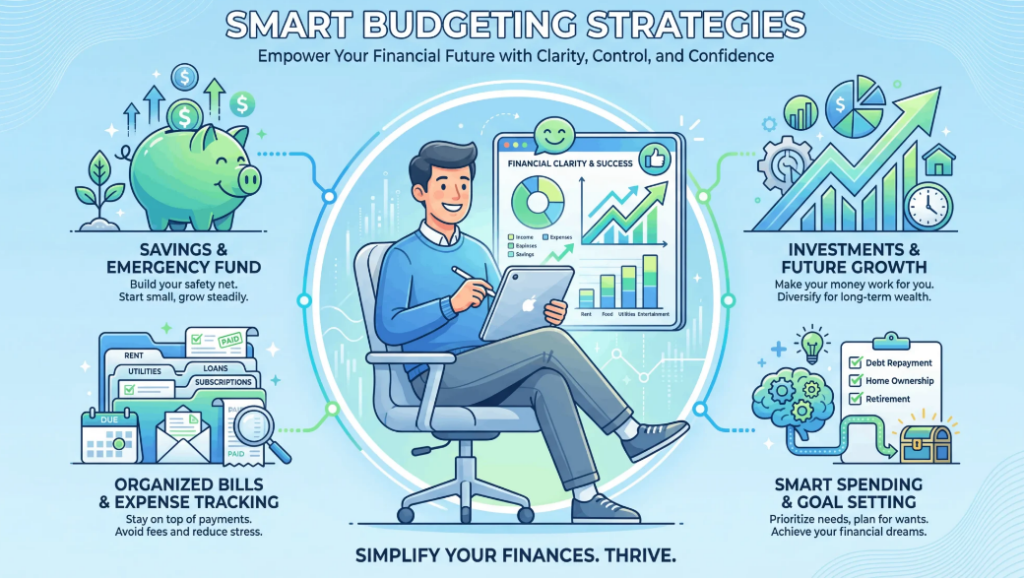
Learn smart budgeting strategies that actually work to save money, reduce debt, manage expenses, and achieve your financial goals with confidence.
Why Budgeting Matters
A budget is simply a plan for how you’ll spend and save your money. Without one, it’s easy to overspend and lose track of where your income goes.
Benefits of budgeting include:
- Better control over your finances
- Reduced unnecessary expenses
- Increased savings
- Less financial stress
- Improved preparation for emergencies
- Faster progress toward financial goals
Budgeting gives every dollar a purpose instead of wondering where your money disappeared each month.
Know Your Monthly Income
The first step in creating a realistic budget is understanding exactly how much money you earn.
Include:
- Salary or wages
- Freelance income
- Side business earnings
- Investment income
- Other regular sources of income
If your income varies each month, calculate your average monthly earnings over the past six months.
Track Every Expense
Many people underestimate how much they spend each month. Tracking expenses reveals spending patterns you may not notice.
Record expenses such as:
- Housing
- Utilities
- Transportation
- Groceries
- Insurance
- Entertainment
- Dining out
- Shopping
- Subscriptions
Even small purchases add up over time.
Separate Needs From Wants
One of the easiest ways to improve a budget is learning the difference between necessities and optional spending.
Needs
- Rent or mortgage
- Food
- Utilities
- Transportation
- Healthcare
- Insurance
Wants
- Streaming services
- Luxury clothing
- Premium coffee
- Dining out frequently
- New gadgets
- Entertainment purchases
Reducing “wants” doesn’t mean eliminating fun—it simply means spending intentionally.
Follow the 50/30/20 Rule
A popular budgeting method divides your income into three categories.
50% for Needs
Cover essential living expenses.
30% for Wants
Spend on hobbies, travel, dining, and entertainment.
20% for Savings and Debt
Focus on:
- Emergency fund
- Retirement savings
- Investments
- Paying off loans
You can adjust these percentages based on your personal financial situation.
Build an Emergency Fund
Unexpected expenses happen to everyone.
Aim to save enough to cover three to six months of living expenses.
Start small if necessary:
- Save $20 each week
- Automatically transfer money into savings
- Increase contributions whenever your income grows
An emergency fund prevents unexpected bills from becoming financial disasters.
Pay Yourself First
Instead of saving what’s left after spending, reverse the process.
When you receive your paycheck:
- Transfer money to savings.
- Invest if possible.
- Pay bills.
- Spend the remaining amount.
Automating savings makes this strategy even more effective.
Reduce Unnecessary Spending
Small changes can produce significant savings over time.
Examples include:
- Cook meals at home more often.
- Cancel unused subscriptions.
- Compare insurance rates annually.
- Shop with a grocery list.
- Buy quality items that last longer.
- Avoid impulse purchases.
Before making a purchase, ask yourself if it’s truly necessary.
Use Cash for Problem Categories
If overspending is a challenge, consider using cash for categories like:
- Dining out
- Entertainment
- Shopping
- Personal spending
When the cash is gone, stop spending until the next budgeting period.
This simple technique naturally limits unnecessary purchases.
Set Clear Financial Goals
Budgets work best when connected to meaningful goals.
Examples include:
Short-Term Goals
- Vacation savings
- New laptop
- Holiday gifts
- Emergency fund
Long-Term Goals
- Buying a home
- Retirement
- Starting a business
- Paying off debt
- College education
Clear goals help maintain motivation.
Review Your Budget Monthly
Life changes regularly, and your budget should adapt.
Review your budget every month by asking:
- Did I stay within my spending limits?
- Which expenses were higher than expected?
- Where can I improve?
- Did I save enough?
Small monthly adjustments keep your budget effective.
Avoid Lifestyle Inflation
When income increases, many people immediately increase spending.
Instead:
- Increase savings.
- Pay off debt faster.
- Invest more.
- Build financial security.
Keeping expenses relatively stable while income grows is one of the fastest ways to build wealth.
Take Advantage of Budgeting Apps
Technology makes budgeting easier than ever.
Many budgeting apps can:
- Track expenses automatically
- Categorize purchases
- Monitor savings
- Set financial goals
- Send spending alerts
Choose a tool that fits your budgeting style and use it consistently.
Stay Consistent
Budgeting is not about perfection.
Some months will include unexpected expenses, but consistency matters more than following every rule perfectly.
Developing strong financial habits over time leads to lasting results.
Common Budgeting Mistakes
Avoid these common errors:
- Not tracking small purchases
- Setting unrealistic spending limits
- Ignoring irregular expenses
- Forgetting annual bills
- Not saving for emergencies
- Giving up after one bad month
Learning from mistakes is part of improving your financial management.
Conclusion
Smart budgeting isn’t about restricting your lifestyle—it’s about making intentional decisions with your money. By understanding your income, tracking expenses, prioritizing savings, and reviewing your budget regularly, you can build financial confidence and work toward your goals more efficiently.
The best budgeting strategy is one you can maintain consistently. Start with small improvements, stay committed, and you’ll see meaningful progress over time.
