Discover the truth behind common technology myths and learn the facts about cybersecurity, smartphones, AI, internet safety, and modern devices.
Why Technology Myths Persist
Technology changes quickly, but outdated information often remains popular. Social media, word-of-mouth advice, and misleading online articles can spread misinformation faster than facts.
Common reasons technology myths continue include:
- Rapid technological advancements
- Misunderstood technical concepts
- Outdated information
- Viral social media posts
- Misleading advertisements
Learning the facts allows users to use technology more confidently and safely.
Myth 1: Macs Cannot Get Viruses
Many people believe that Apple computers are completely immune to malware.
The Truth
While macOS includes strong built-in security features, Macs can still be infected by malware, ransomware, phishing attacks, and other cyber threats.
Mac users should still:
- Install software from trusted sources
- Keep macOS updated
- Avoid suspicious email attachments
- Use reliable security tools when appropriate
No operating system is completely immune to cyberattacks.
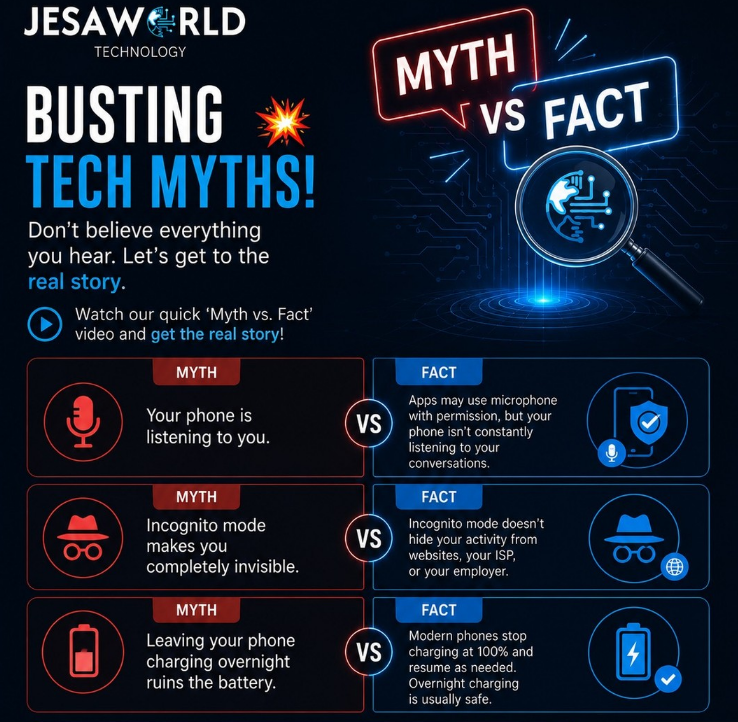
Myth 2: Incognito Mode Makes You Anonymous
Private browsing is often misunderstood.
The Truth
Incognito or private browsing only prevents your browser from saving your browsing history, cookies, and temporary files on your device.
It does not hide your activity from:
- Internet service providers
- Employers
- Schools
- Website owners
- Government agencies
For stronger online privacy, users should understand additional privacy tools and secure browsing practices.
Myth 3: More Signal Bars Mean Faster Internet
Many people assume full signal strength guarantees excellent internet performance.
The Truth
Signal strength is only one factor affecting connection quality.
Internet speed also depends on:
- Network congestion
- Carrier performance
- Available bandwidth
- Server response time
- Device capability
Even with full signal bars, internet performance may vary.
Myth 4: Closing Background Apps Always Improves Performance
Some smartphone users constantly close apps to save battery life.
The Truth
Modern operating systems are designed to manage background applications efficiently.
Frequently forcing apps to close may actually:
- Increase battery usage
- Slow app reopening
- Reduce overall efficiency
Unless an app becomes unresponsive, it’s usually better to let the operating system manage resources.
Myth 5: Charging Your Phone Overnight Damages the Battery
This is one of the most common smartphone myths.
The Truth
Today’s smartphones include smart charging systems that stop charging once the battery reaches full capacity.
Although keeping a battery at 100% continuously may contribute to gradual wear over many years, occasional overnight charging is generally safe for most modern devices.
To maximize battery lifespan:
- Avoid extreme heat
- Use certified chargers
- Keep software updated
- Avoid frequent full battery depletion
Myth 6: Public Wi-Fi Is Always Safe
Free Wi-Fi is convenient, but not always secure.
The Truth
Public networks may expose users to security risks if proper precautions are not taken.
Potential dangers include:
- Data interception
- Fake Wi-Fi hotspots
- Password theft
- Malware attacks
When using public Wi-Fi:
- Avoid online banking
- Don’t enter sensitive information
- Use secure websites (HTTPS)
- Enable two-factor authentication
- Consider using a trusted VPN
Myth 7: Deleting Files Permanently Removes Them
Many users believe deleting a file completely erases it.
The Truth
Deleting a file usually removes its reference from the file system, but the data may remain recoverable until overwritten.
If sensitive data needs to be removed permanently, specialized secure deletion methods are recommended.
Myth 8: Antivirus Software Provides Complete Protection
Installing antivirus software is important, but it is not enough by itself.
The Truth
Cybersecurity depends on multiple layers of protection.
Good security also includes:
- Strong passwords
- Regular software updates
- Safe browsing habits
- Email awareness
- Two-factor authentication
Cybersecurity is about combining good tools with responsible online behavior.
Myth 9: More Megapixels Always Mean Better Photos
Many buyers judge smartphone cameras only by megapixel count.
The Truth
Image quality depends on many factors besides megapixels.
Important factors include:
- Sensor size
- Lens quality
- Image processing
- Lighting conditions
- Optical stabilization
A phone with fewer megapixels can sometimes produce better photos than one with a much higher megapixel count.
Myth 10: You Should Never Turn Off Your Computer
Some people believe computers should remain on continuously.
The Truth
Restarting a computer regularly can actually improve performance.
Benefits include:
- Clearing temporary memory
- Installing system updates
- Improving stability
- Fixing software glitches
- Enhancing security
For many users, restarting once every few days is a good practice.
Myth 11: Artificial Intelligence Will Replace Every Job
AI continues to transform many industries, leading some people to fear widespread job loss.
The Truth
Artificial intelligence is more likely to automate repetitive tasks than eliminate every profession.
Many careers will evolve rather than disappear.
Future workplaces will increasingly value:
- Creativity
- Critical thinking
- Communication
- Leadership
- Problem-solving
AI is becoming a tool that supports human productivity rather than replacing all workers.
Myth 12: More Expensive Technology Is Always Better
Higher prices often suggest premium quality, but cost alone doesn’t determine value.
The Truth
The best device depends on individual needs.
Before purchasing technology, consider:
- Features
- Performance
- Reliability
- Software support
- Customer reviews
- Overall value
Choosing products based on actual requirements is usually more beneficial than simply buying the most expensive option.
How to Avoid Technology Misinformation
To separate facts from myths:
- Verify information using trusted sources.
- Keep learning about new technologies.
- Update your devices regularly.
- Be skeptical of sensational online claims.
- Compare information from multiple reliable sources.
Critical thinking is one of the most valuable digital skills today.
Final Thoughts
Technology myths can create unnecessary confusion and sometimes expose users to security risks or poor purchasing decisions. By understanding the facts behind common misconceptions, individuals and families can use digital devices more effectively and confidently.
As technology continues to evolve, staying informed through reliable information is the best way to make smarter decisions. Whether you’re choosing a new smartphone, protecting your online privacy, or improving your digital skills, understanding the truth behind these common technology myths will help you navigate the digital world with greater confidence.
